
One design rule we don't always subscribe to?
Matching all your metals.
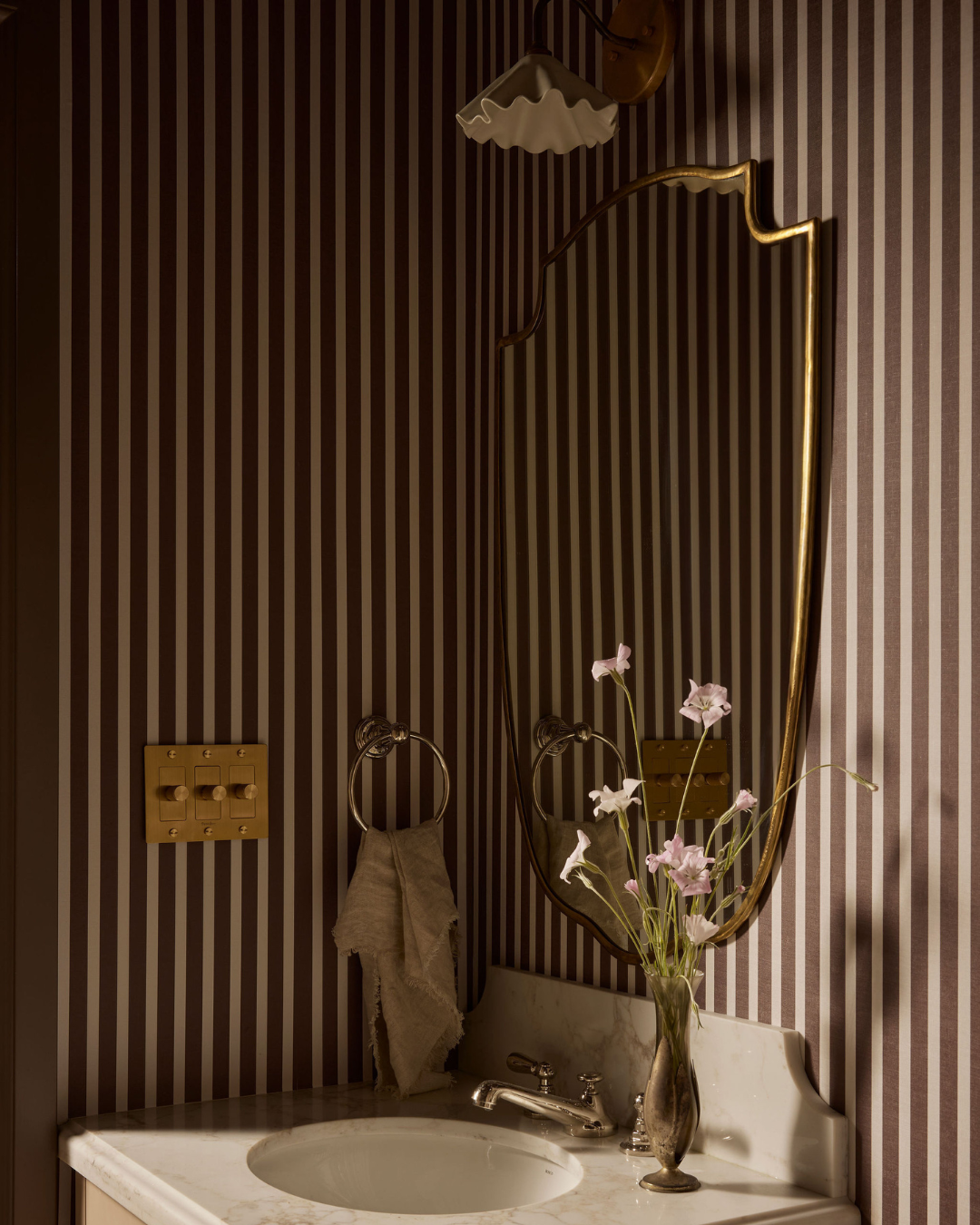
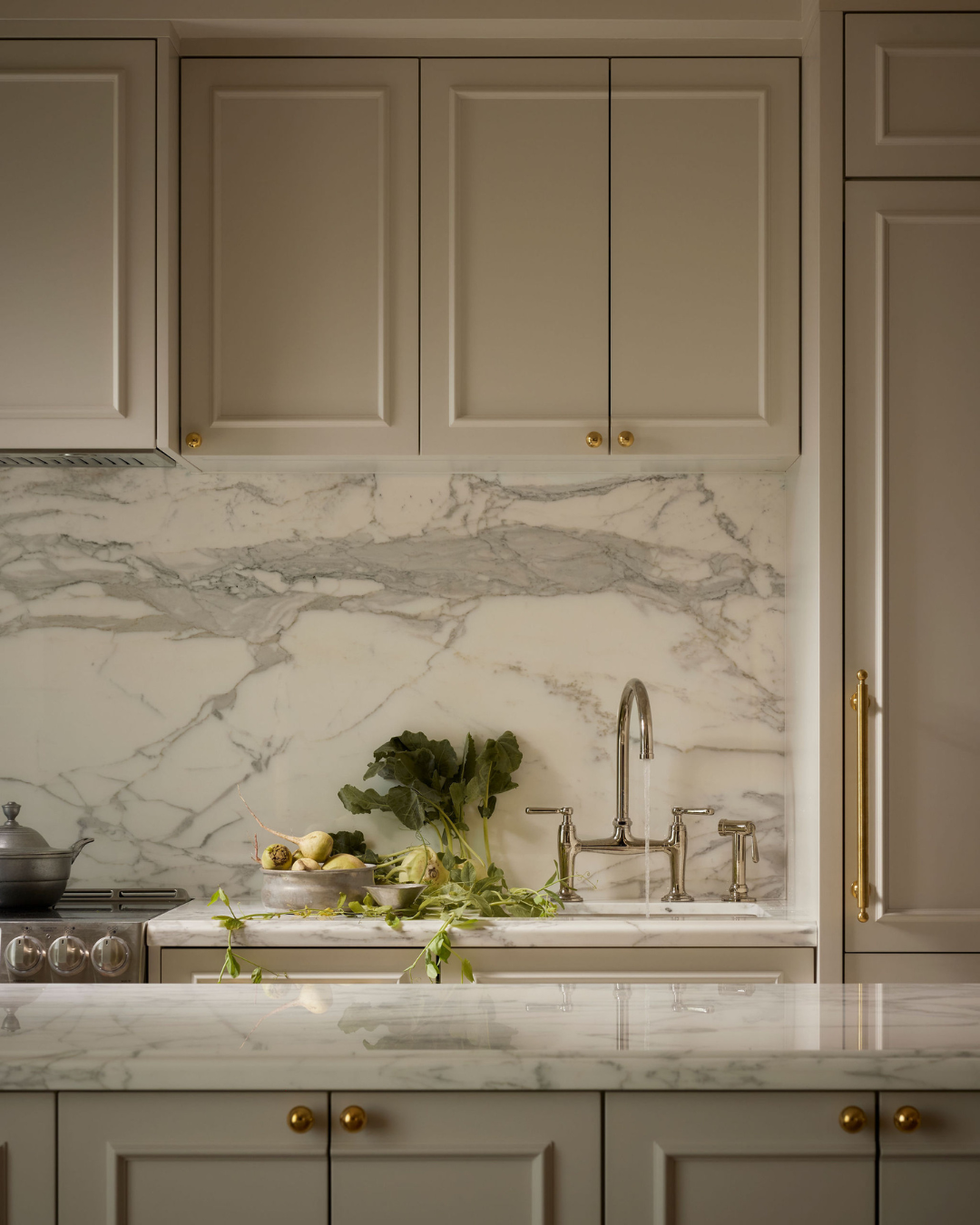
There's a common misconception that the metal finishes in a room need to match for a space to feel cohesive. While there's certainly nothing wrong with working within a single finish, we often find that introducing a little contrast makes a room all the more interesting.
A polished nickel faucet alongside brass cabinet hardware, an aged brass wall light in a bathroom with chrome fixtures, or a beautifully detailed switch plate in an unexpected finish. It's these subtle combinations that can bring another layer of character to a space.
As with most things in design, it's all about balance.
Create a Sense of Consistency
When mixing metals, we typically like to establish some consistency among elements that serve a similar purpose.
In a bathroom, for example, we'll generally keep the faucet, shower fixtures, and bathroom accessories in a coordinated finish. This creates a cohesive foundation and gives us more freedom to introduce something different elsewhere in the room.
Rather than trying to incorporate contrast into every detail, we look for moments where a different finish can really complement the design.
Look Beyond the Obvious
Some of our favourite opportunities to introduce a secondary metal finish are through the smaller architectural and decorative details.
Lighting, cabinet hardware, mirrors, and even switch plates are all wonderful places to introduce a little contrast.
In the guest bathroom at our Ivywood project, we incorporated contrasting metal finishes through the lighting and switch plates while keeping the plumbing fixtures coordinated. Against the rich, striped wallpaper, these details add another layer of interest without competing with one another.
It's a small distinction, but one that makes the space feel more considered.
Consider the Room as a Whole
When selecting metal finishes, we think about them in the context of the entire material palette rather than in isolation.
The warmth of brass might complement the tones in a natural stone countertop or timber cabinetry, while a cooler polished finish can bring a lovely sense of contrast to an otherwise warm space.
It's worth looking at your metal finishes alongside your paint colours, fabrics, stone, and wood samples. You may find that two finishes that seem quite different on their own work beautifully together when they're part of a larger palette.
We tend to favour one predominant finish, allowing a secondary metal to come through in a handful of carefully considered details. There isn't a particular formula we follow, but we always want the combination to feel balanced rather than overdone.
Cohesive Doesn't Have to Mean Matching
We're drawn to interiors that feel layered and collected, rather than perfectly coordinated. Mixing metals is one of the more subtle ways to achieve that feeling.
If you're considering introducing a different finish into your own home, start small. A new light fixture, a vintage mirror, or a set of cabinet knobs can be a beautiful addition without needing to change everything around it.
Not every detail needs to match to belong in the same room. Sometimes, it's the contrast between them that makes the whole space work.